USEPA requires all owners of wastewater
collection systems to continually maintain and repair their collection
systems to prevent sanitary sewer over-flows (SSOs) from inflow and
infiltration during storms. A sewer system evaluation study (SSES) is
a prescribed analysis of the sewer infrastructure to identify defects,
estimate repair costs and prioritize corrective actions.
ELEMENTS OF AN SSES
Field Investigations
Flow monitoring – Quantifies inflow/ infiltration
problems by sewer basin
Manhole Inspections – Examines
structural conditions and confirms interconnectivity of the line segments
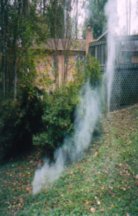
Smoke Testing – Locates direct storm water connections
to sewer
Closed-circuit TV inspection – Provides visual record of
pipe defects
System Assessment
Reviews capacity management, operations and maintenance (CMOM) programs
Determines sewer line capacities and potential overflow points
Locates defects in manholes, line segments, and pump stations
Identifies sewer infrastructure deficiencies and system needs
Defines long-term capital and operating costs
Identifies financing and funding options
Five-year CIP Budget Items
SSES – Defines Priority 1 defects and rehab priorities
GIS Mapping – Integrates database with manhole and line locations
Rehab – Schedules work orders. Tracks repairs and costs
Equipment – Provides new and replacement items
O & M Program – Repairs, maintains and monitors system performance
Plan of Action
Establishes program goals for regulatory compliance and
cost-efficient expenditures of capital and operating funds
Prioritizes corrective actions for phased implementation
Outlines a plan for funding the 5-yr CIP
Establishes annual line-item budgets for Years 1-5
WHAT ARE THE BENEFITS OF AN SSES?
Provides an inventory of the sewer system infrastructure
Provides assessment of system defects and deficiencies
Establishes funding requirements
Presents a plan of action for management review and approval